

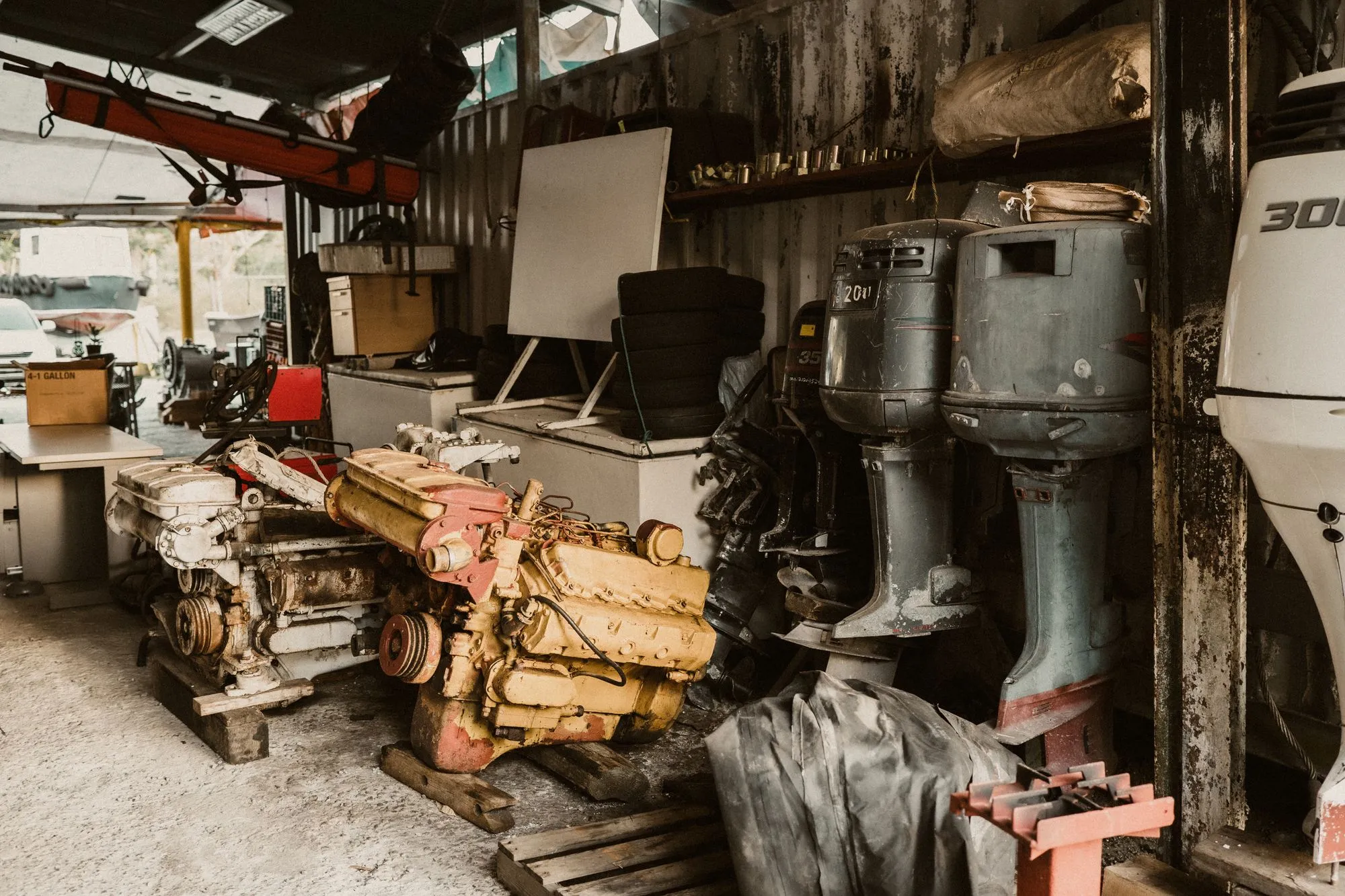
Run the jobs.
Not the paperwork.
Work orders, quotes, customers and documents in one place — so the answer to“where is that motor?” is a screen, not a walk across the shop.
Live at Motors & Drives since August 2026. Their mechanics use it daily, across two shops.

The job is in six places and none of them agree
The quote is in an email. The parts are on a whiteboard. What actually happened is in somebody's head, and the invoice is a best guess written on Friday. It works right up until the person holding it in their head is off sick.
Wave Works is the boring fix: one record per job, from the phone call to the invoice, that everybody is looking at the same copy of.
- One number per job — not a description everyone words differently.
- One history — notes, parts, photos and who touched it, in order.
- One document trail — quotes and service orders built from the record itself.
Follow a single motor through the shop
Four steps, in the order they actually happen. Every screen below is the real thing — nothing on this page is a mockup.
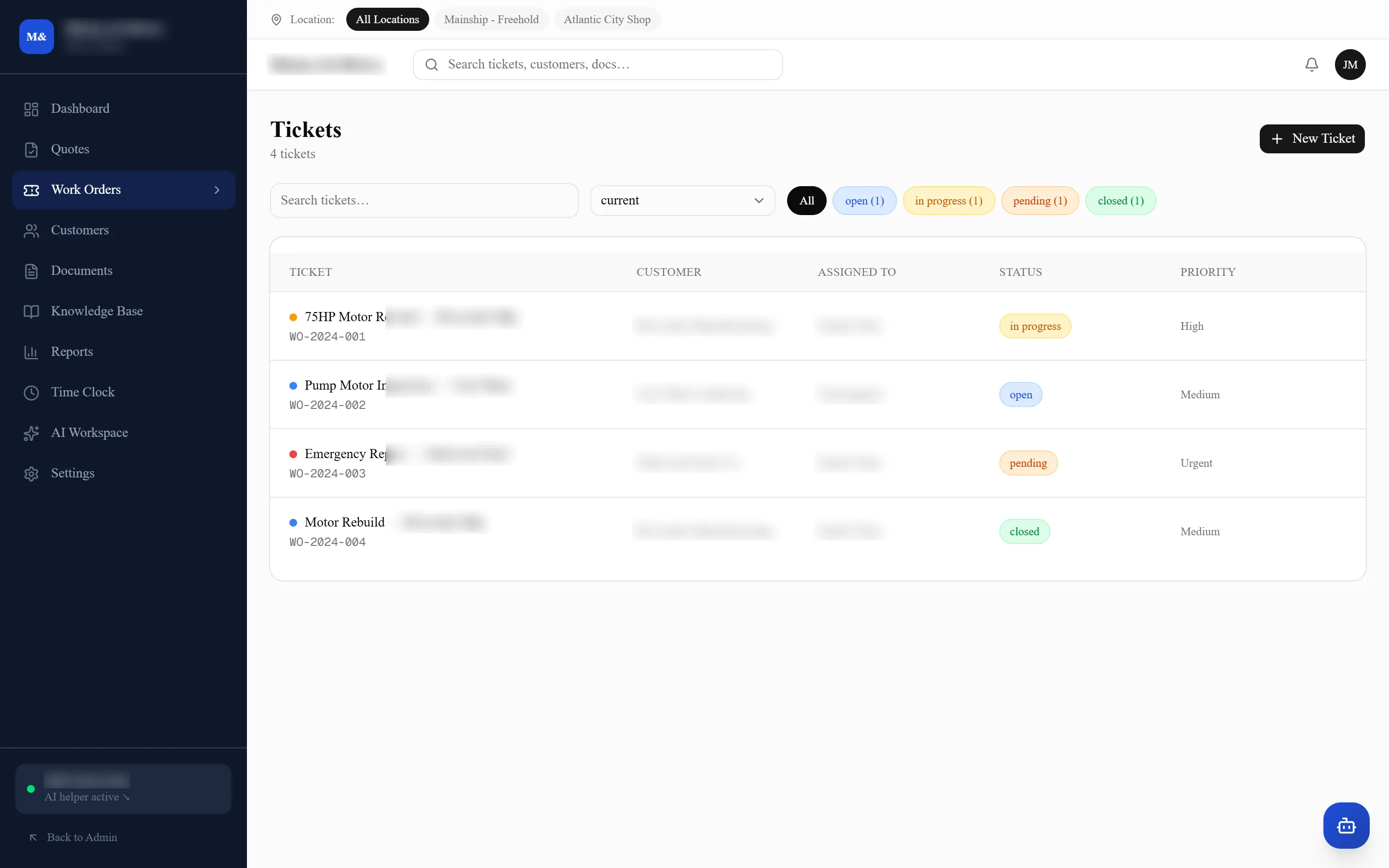
The job comes in
Somebody rings, or a customer emails, and it's a work order before anyone puts the phone down. Customer, location, what's wrong, how urgent. It gets its own number the moment it's saved, so from then on there's one thing to say instead of a description.
Numbering is per location, so two shops can never hand out the same number.
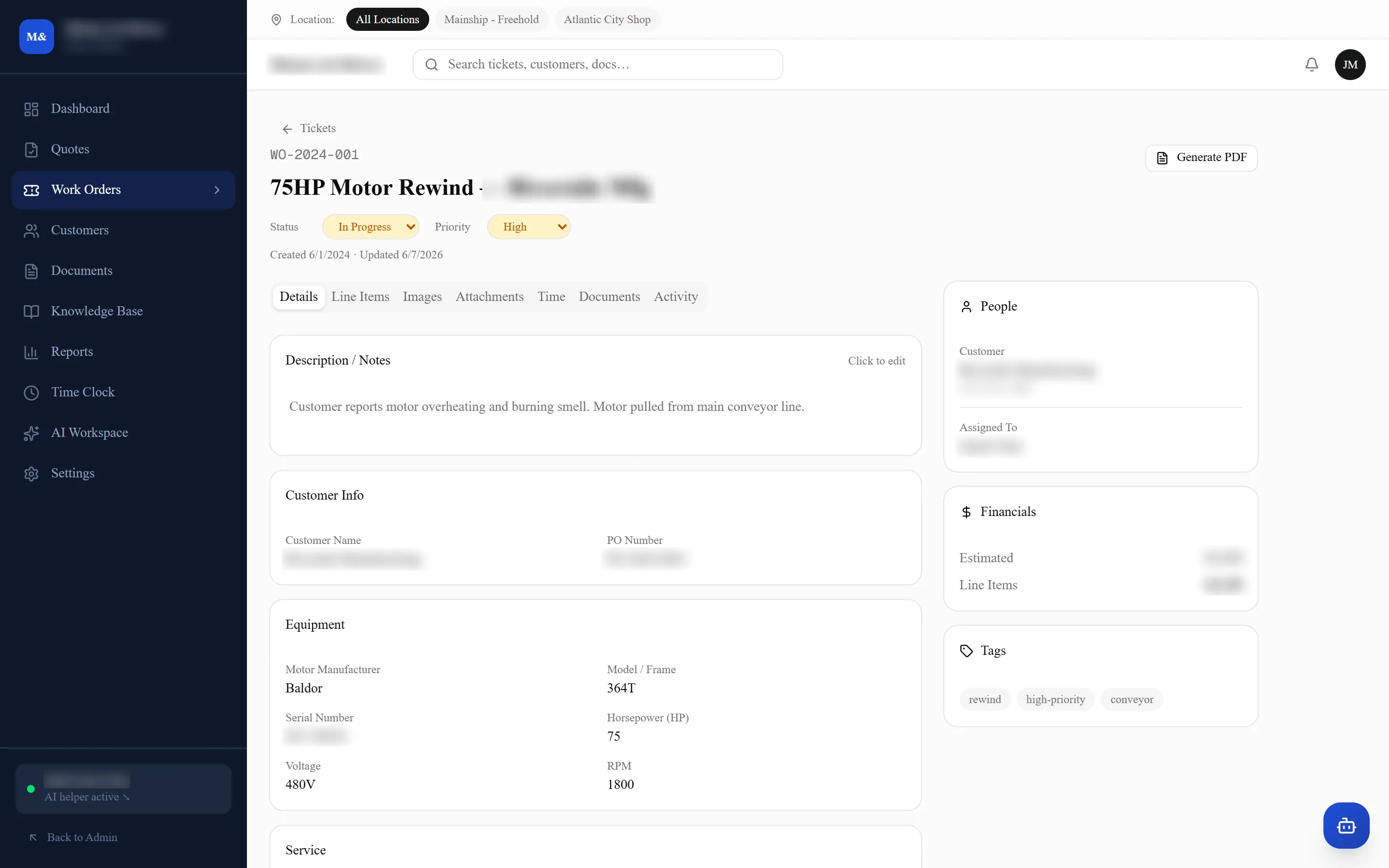
It goes on the board
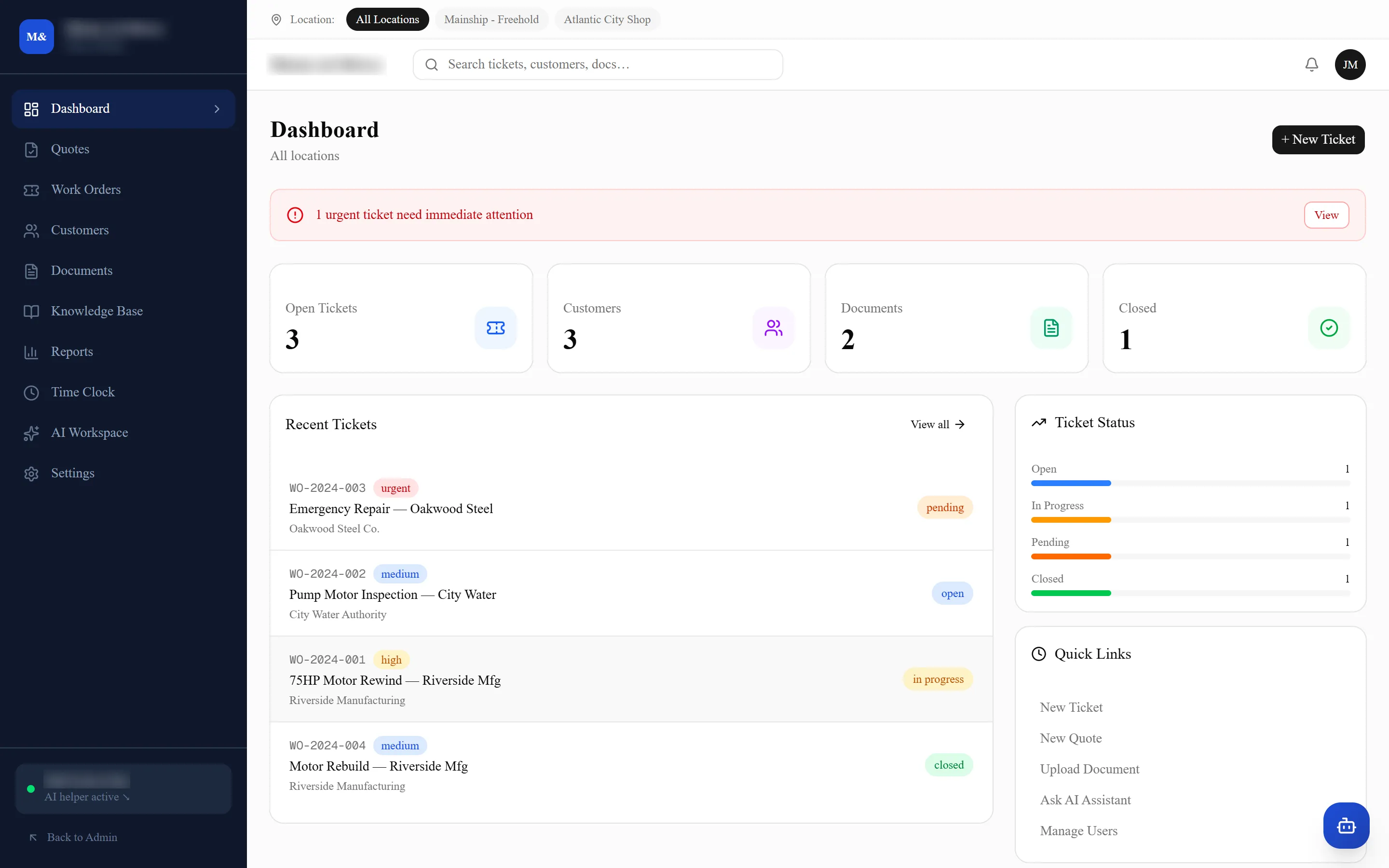
Assigned to somebody, given a priority, and visible to everyone who needs to see it. Status changes as the work moves — open, in progress, pending parts, closed. Nobody has to ask where anything is, because the answer is on the screen they already have open.
Notes, photos and parts all hang off the job, not off somebody’s memory.
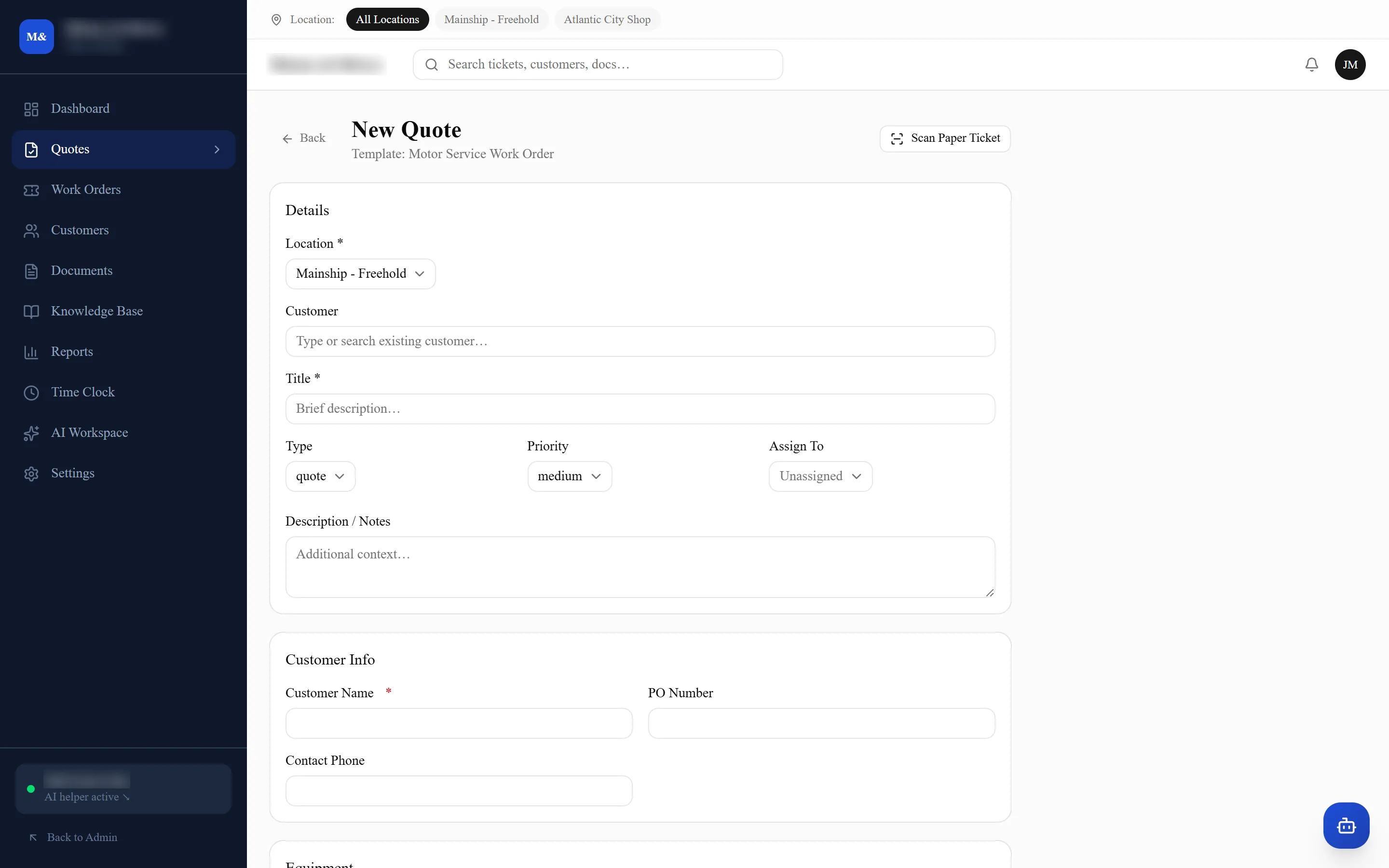
The customer gets a number
A quote starts from a work order template with the customer, the location and the equipment already on it, so nothing gets retyped. If the job came in on a paper ticket, Scan Paper Ticket reads it and fills the form in for you.
A quote and the work order behind it can never drift apart, because they are the same record.
The paper stops being paper
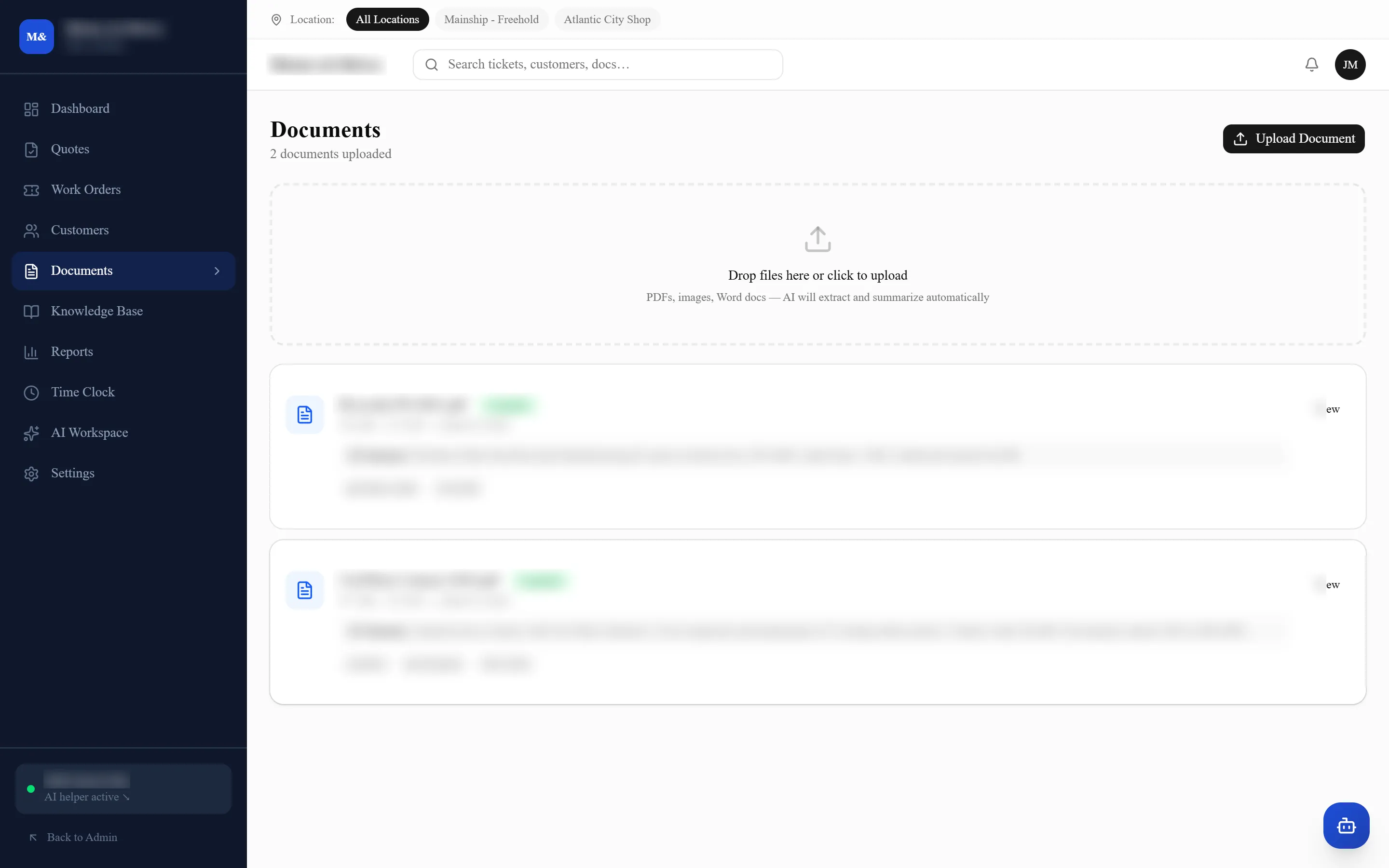
Their purchase order, their contract, the photo of the plate — dropped in, read automatically and filed against the job it belongs to, with a summary you can actually search. Going the other way, the service order and the quote come out of the record as branded PDFs.
Nothing is filed by hand, so nothing is filed in the wrong place.

The apprentice does not need to see your margins
Every person gets their own set of permissions — what they can open, what they can change, what they can delete, and whether they see money at all. People can be tied to the locations they actually work at, and see the jobs there and not the others.
The part that matters: it is enforced in the database, not in the page. Hiding a price on screen leaves it sitting in the browser for anyone who knows where to look. Here it is blanked before it ever leaves the server.
- Per-person, not just per-role
- Costs and pricing off for the people who should not see them
- Locked to a location, or to several
- Your company's data is separated from every other company's
It is the difference between a number being hidden and a number never being sent. Only the second one is real.
Where the time actually goes
Reporting you did not have to assemble
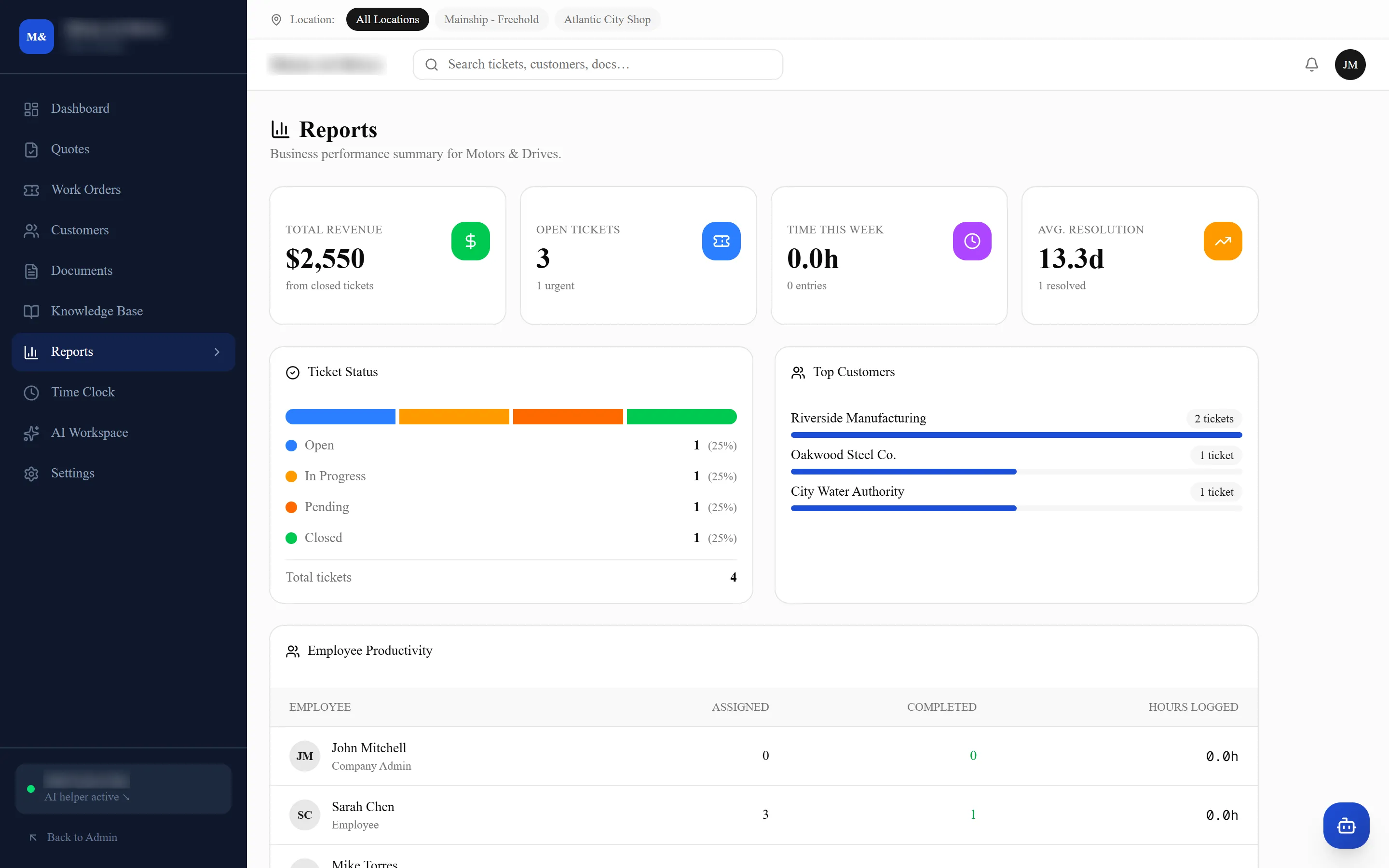
Hours, jobs, customers and what they are worth, built out of the work as it happens rather than from a spreadsheet somebody keeps up on a Friday. Time is clocked against the job it was spent on, so the numbers are the real ones.
An assistant that has read everything
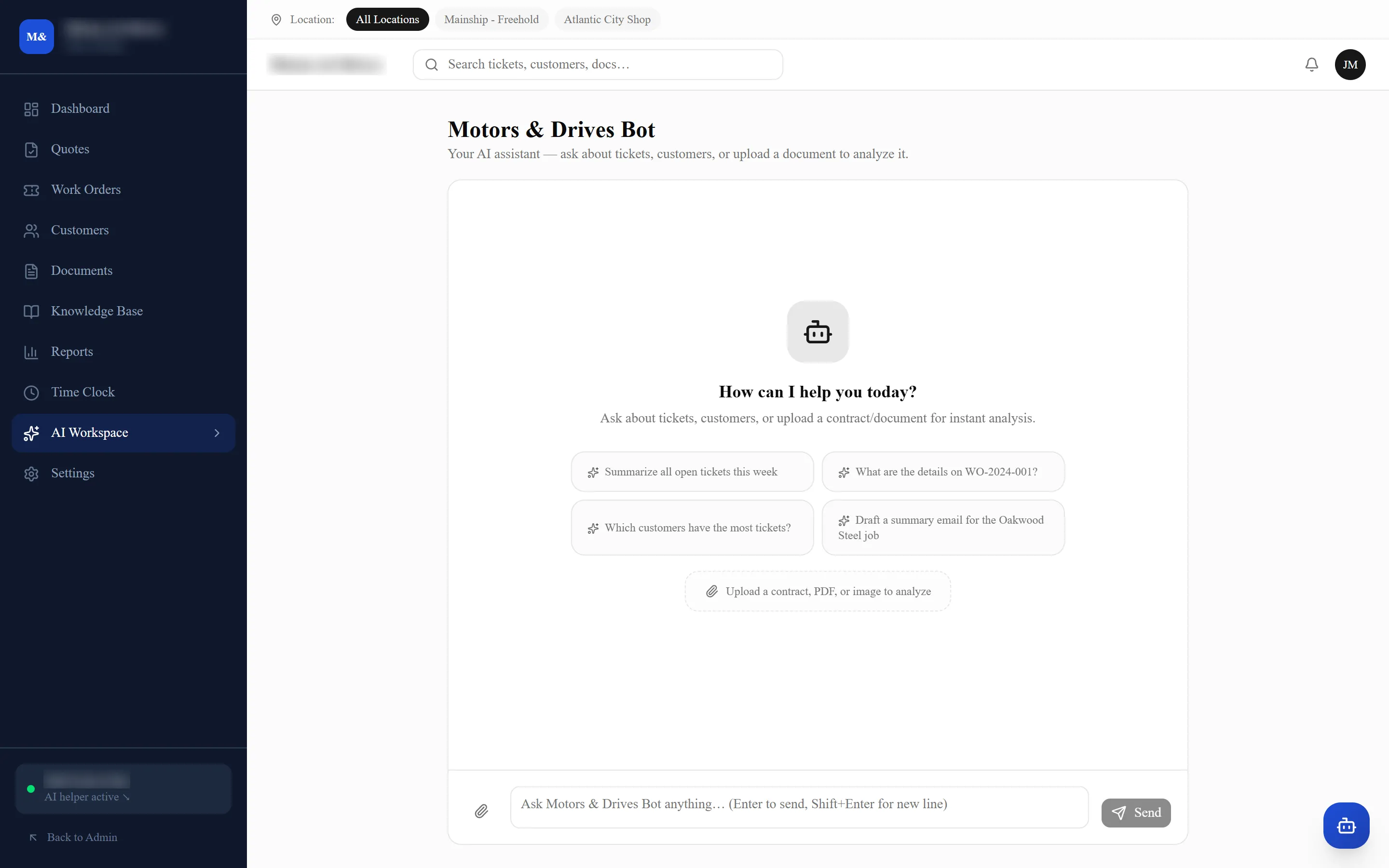
Ask it where a job is, what you did for this customer last time, or to draft the write-up for one you have just finished. It reads your jobs, your customers and your own knowledge base — and it drafts. It does not close jobs, move money, or send anything to anybody.
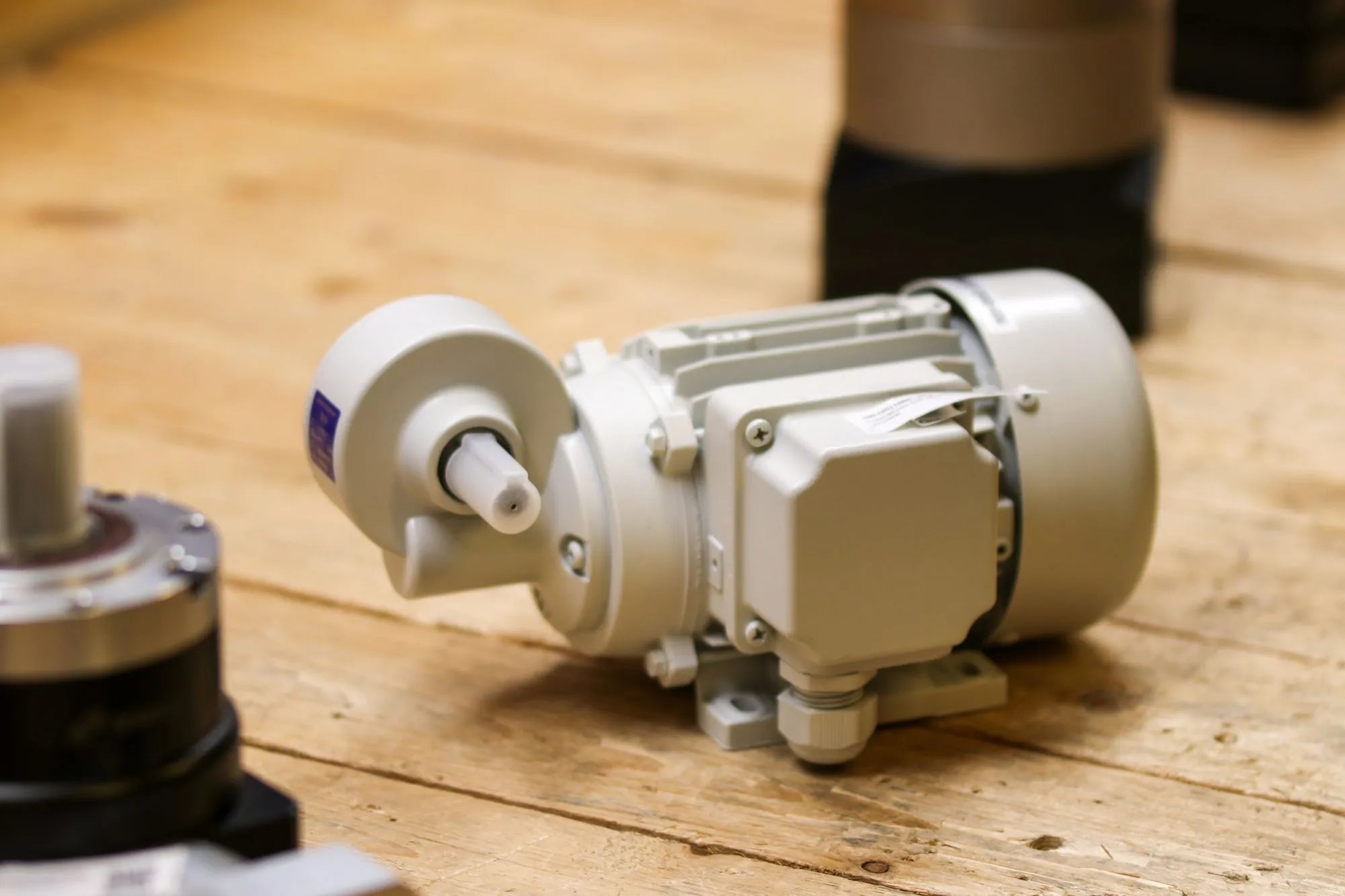
Motors & Drives went live in August 2026
Wave Works was not designed in the abstract and then sold to somebody. It was built alongside an electric motor repair business across two shops, in front of the people who had to use it, and it has been running their floor since.
That is why it is opinionated about things most systems are vague about — job numbering, who can see a price, what happens when two locations are working at once. Those were not features on a list. They were the things that went wrong first.
“The Team does great work and this new system has made us more efficient and saving our valuable data”
The things people ask before they move
No. It was built with one — Motors & Drives — because building for a real shop beats building for an imaginary average. Underneath it is a job, a customer, a document and a person doing the work, which is every service business. If your work arrives as jobs and leaves as invoices, it fits.
Yes, and it is enforced in the database rather than just hidden on screen. That distinction matters: a lot of systems only stop the number being drawn, which means it is still sitting in the page for anyone who knows where to look. Here the price is blanked before it ever leaves the server.
Yes. People can be tied to the locations they actually work at, and they see the jobs at those locations and not the others. Job numbering is per location too, so two shops working at once never collide on a number.
It gets read, not thrown away. Customers, open jobs and history come across before you switch, and you run the two side by side for as long as you want to. Motors & Drives moved off an older system this way rather than starting empty on a Monday morning.
No. It reads and it drafts — it will find the job you are thinking of, pull the history on a customer, or write the first version of a write-up. It does not close jobs, move money or send anything. Anything that leaves the building is something a person pressed send on.
It depends on how many people are in it and which parts you use, so you get a real number after a short conversation rather than a pricing table that would not apply to you. There is no long contract.

Come and see it with your own jobs in it
Half an hour, screen shared, with a couple of your real work orders typed in so you can see what it would actually look like. No deck.